What Expenses Can Online Models and OnlyFans Creators Claim in the UK?
If you are self-employed as an online model, cam model, OnlyFans creator, adult content creator, influencer, or digital performer, it is important to understand which expenses you may be able to claim against your income.
Claiming the right expenses can reduce your taxable profit, meaning you only pay tax on the money you have genuinely earned after business costs. However, the key rule is that expenses must be incurred wholly and exclusively for the purpose of your business.
For creators, this can sometimes feel like a grey area. Many items are used both personally and professionally, so it is important to understand what may be allowable, what may need to be apportioned, and what is unlikely to be accepted.
The Golden Rule: Business Use Matters
HMRC generally allows self-employed individuals to claim expenses that are directly related to running their business.
For online models and OnlyFans creators, this means the expense should relate to producing content, managing subscriptions, promoting your page, communicating with fans, maintaining your brand, or running the admin side of your business.
Where something has both personal and business use, you may only be able to claim the business proportion. For example, if you use your phone 60% for your content business and 40% personally, you may only be able to claim 60% of the relevant cost.
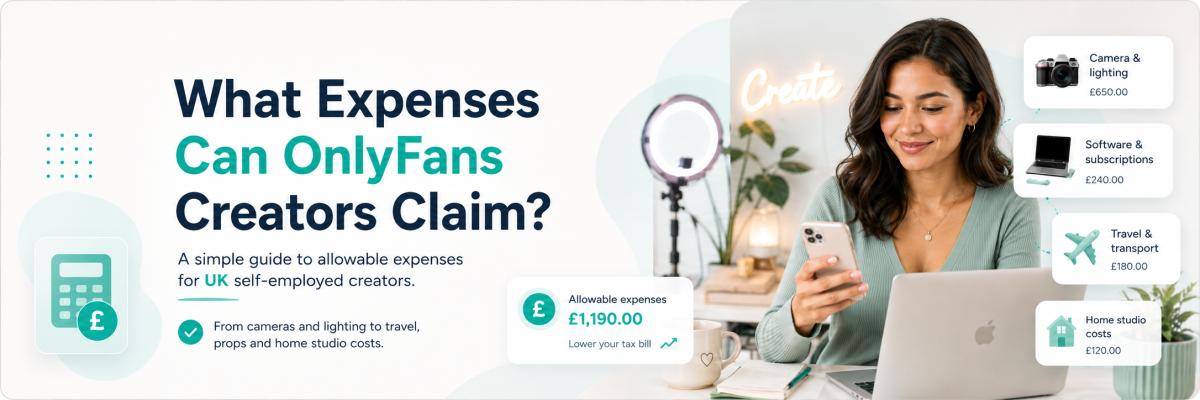
Common Expenses Online Models and OnlyFans Creators May Be Able to Claim
1. Equipment and Technology
Content creators often rely on good-quality equipment to produce professional photos, videos, livestreams, and promotional content.
You may be able to claim for:
Cameras
Lighting equipment
Tripods
Microphones
Ring lights
Laptops or computers
Phones used for business
Storage devices
Memory cards
Editing equipment
Webcams
Backdrops and studio accessories
If the item is used partly for personal reasons, only the business percentage should be claimed.
2. Internet, Phone, and Software Costs
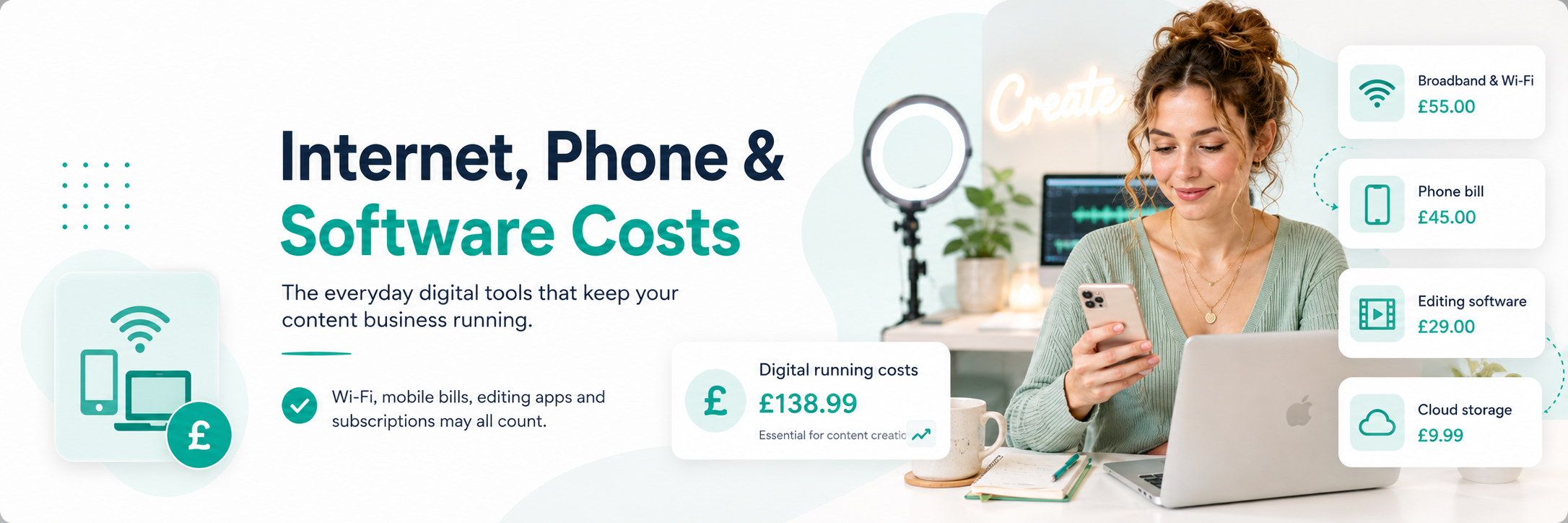
Most online creators need reliable internet and digital tools to run their business. These costs can be essential for uploading content, managing messages, editing videos, communicating with subscribers, and promoting services.
You may be able to claim for:
Business-use internet costs
Mobile phone bills
Editing software
Photo and video apps
Cloud storage
Website hosting
Email marketing tools
Scheduling platforms
Accounting software
VPNs or security software used for business
Again, if there is personal use, the claim should be restricted to the business element.
3. Content Creation Costs
Many creators spend money on items specifically for shoots, livestreams, or paid content. Where these costs are clearly linked to the business, they may be allowable.
Examples may include:
Props for content
Set design items
Studio decorations used for shoots
Themed accessories
Photography costs
Videography costs
Editing support
Content planning tools
Paid collaborators or assistants
Location hire for shoots
The more clearly the cost links to income-generating content, the easier it is to justify.
4. Clothing, Lingerie, Costumes, and Appearance
This is one of the most common questions for adult creators.
Some clothing or outfits may be claimable if they are purchased specifically and exclusively for content creation and are not ordinary everyday clothing. For example, costumes, character outfits, or items used only for shoots may be easier to justify than general clothing that could be worn personally.
Potentially claimable items may include:
Costumes for specific content
Branded or themed outfits
Performance clothing
Items used solely for shoots
Specialist accessories used in content
However, ordinary clothing is usually difficult to claim, even if worn in content, because it has a personal use. Lingerie can also be a grey area, so it is important to keep clear records and only claim where the item is genuinely purchased for business use.
5. Beauty, Hair, and Grooming Costs
For online models and performers, appearance may be part of the brand. However, beauty and grooming costs are often treated carefully because they can have a personal benefit.
Some costs may be easier to justify if they are directly linked to a specific shoot, performance, brand campaign, or piece of paid content.
Examples that may be considered, depending on the circumstances, include:
Make-up for shoots
Hair styling for specific content
Nails or beauty treatments for a paid campaign
Spray tans or treatments required for a particular shoot
Make-up artists or stylists for content production
General personal grooming, everyday make-up, regular haircuts, or beauty treatments with a personal benefit may not be fully allowable. Where there is mixed use, advice should be taken before claiming.
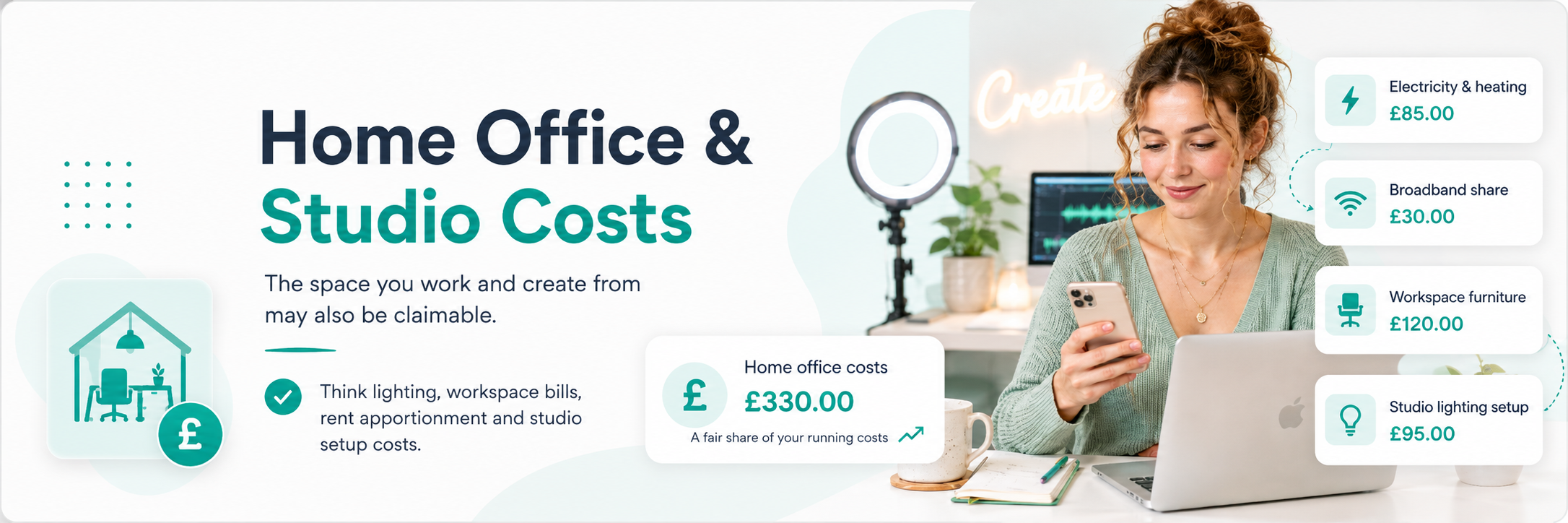
6. Home Office and Studio Costs
Many creators work from home, using a room or part of a room as a filming space, editing area, or admin office.
You may be able to claim a proportion of household costs, such as:
Electricity
Heating
Internet
Rent or mortgage interest, depending on the circumstances
Council tax
Water
Home insurance
Cleaning costs
Repairs to the business area
Alternatively, some self-employed individuals may use simplified expenses for working from home, depending on their circumstances.
If you use part of your home as a studio, it is important to calculate a fair business proportion and keep notes showing how this was worked out.
7. Travel and Accommodation
If you travel for business purposes, some travel costs may be allowable.
For example:
Travel to photoshoots
Travel to filming locations
Travel to business meetings
Travel to events, collaborations, or brand work
Hotels for business trips
Parking
Train fares
Taxi fares
Mileage for business journeys
Travel from home to a regular workplace is not usually allowable, but travel to temporary business locations may be.
If a trip has both personal and business purposes, only the business-related element should be claimed.
8. Marketing and Promotion
Creators often need to invest in marketing to grow their audience and increase subscriptions.
You may be able to claim for:
Paid social media advertising
Website costs
Branding
Logo design
Graphic design
Photography for promotional use
Promotional videos
Business cards
PR support
Marketing consultants
Giveaways linked to business promotion
Marketing expenses are usually easier to justify where they are clearly intended to generate income.
9. Platform, Payment, and Banking Fees
Online creators may incur fees from the platforms and payment providers they use.
You may be able to claim for:
Platform commission
Payment processing fees
Bank charges on business accounts
Currency conversion fees
Chargeback fees
Subscription management tools
Invoicing software
It is a good idea to download platform statements regularly so income and fees can be clearly recorded.
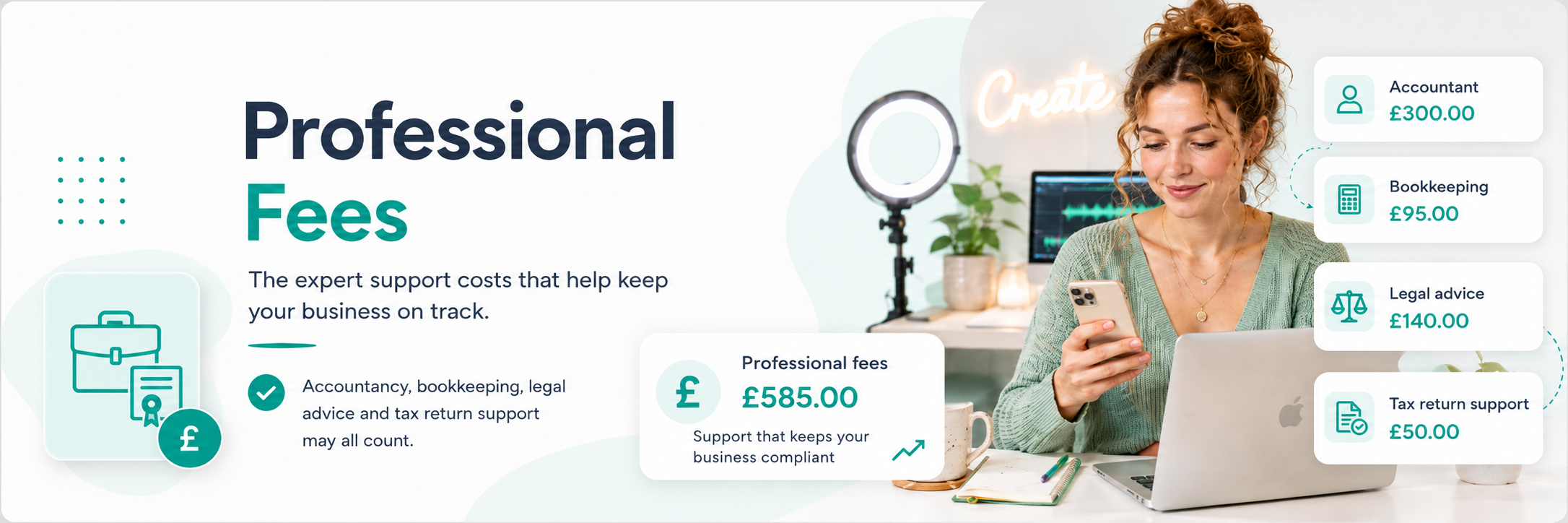
10. Professional Fees
Running a creator business still means running a business. Professional support can be an allowable cost where it relates to your self-employment.
You may be able to claim for:
Accountancy fees
Tax return preparation
Bookkeeping support
Legal advice for business contracts
Professional insurance
Business advice
Copyright or intellectual property advice
This can be especially important for creators dealing with multiple income streams, international platforms, VAT questions, or privacy concerns.
11. Training and Development
Training may be allowable where it helps you improve or maintain skills used in your current business.
For online creators, this might include:
Photography courses
Video editing courses
Social media marketing training
Lighting or production workshops
Business coaching
Accounting or bookkeeping training
Cybersecurity training
Content strategy courses
Training that helps you run or improve your existing business is generally more likely to be allowable than training for a completely new trade.
12. Security, Privacy, and Online Protection
For adult creators, privacy and safety are particularly important. Some security-related costs may be business expenses where they protect your work, identity, data, or online presence.
Examples may include:
VPNs used for business
Cybersecurity software
Password managers
Business PO box or mail handling services
Privacy protection services
Watermarking tools
Anti-piracy monitoring
Legal support for content misuse
Secure storage
These costs should be clearly linked to protecting the business.
Expenses That May Be Difficult to Claim
Some costs are commonly misunderstood. These may not be allowable, or may only be partly allowable, depending on the circumstances:
Everyday clothing
General beauty treatments
Gym memberships
Personal meals
Holidays with some content creation included
Personal rent or household bills without a business-use calculation
Entertainment costs
Personal subscriptions
Items used mainly outside the business
The test is not simply whether something helps you look good or feel confident for work. The question is whether the cost is genuinely for the business and whether there is a private benefit.
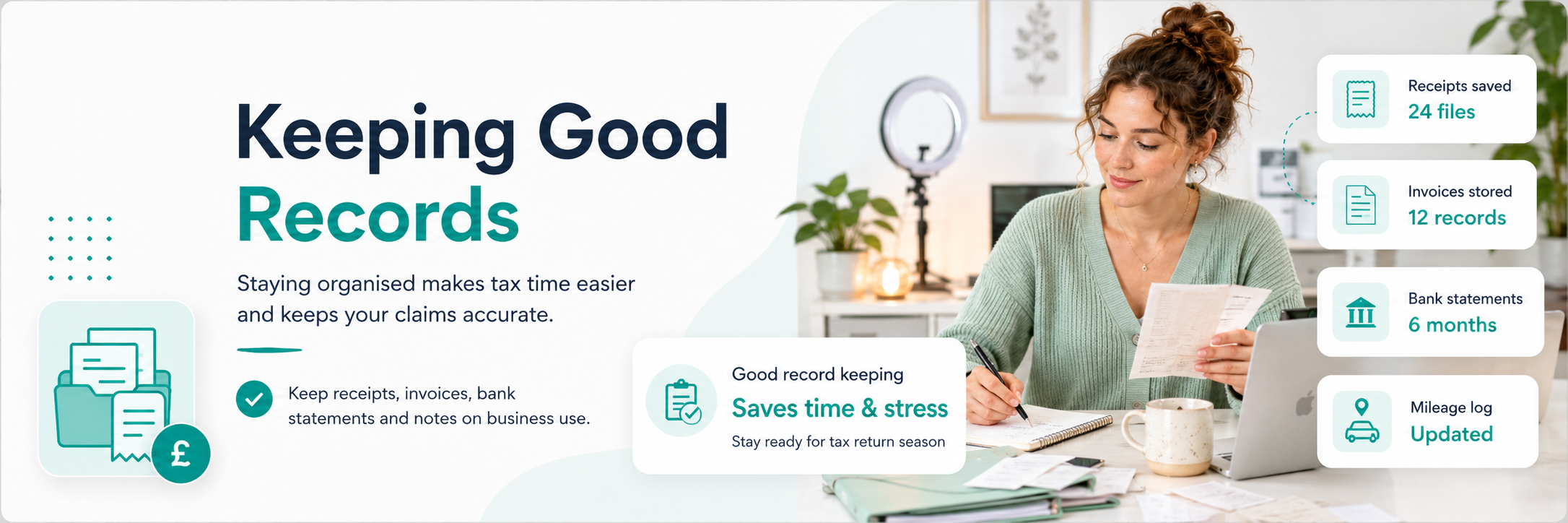
Keep Good Records
Good record keeping is essential. You should keep:
Receipts
Invoices
Bank statements
Platform income reports
Payment processor statements
Mileage logs
Notes explaining business use
Screenshots of relevant business purchases
Evidence of how costs were split between personal and business use
This is especially important for online models and OnlyFans creators, where some expenses may be more unusual than those of a traditional business.
Final Thoughts
Being an online model or OnlyFans creator is a real business, and the tax rules should be approached professionally. The right expenses can reduce your tax bill, but claims should be realistic, well-recorded, and linked clearly to your work.
If you are unsure whether an expense is allowable, it is better to ask before claiming. One & Only Accounts can help you understand what you can claim, organise your records, and file your tax return correctly.
Need Help With Your Creator Tax Return?
At One & Only Accounts, we support online models, OnlyFans creators, cam models, influencers, and digital entrepreneurs with straightforward, confidential tax advice.
Whether you need help registering as self-employed, understanding allowable expenses, preparing your Self Assessment tax return, or keeping your income records in order, our team can help you stay compliant and tax-efficient.
Disclaimer: Any advice in this publication is not intended or written by One & Only Accounts to be used by a client or entity for the purpose of (i) avoiding penalties that may be imposed on any taxpayer or (ii) promoting, marketing or recommending to another party matters herein.